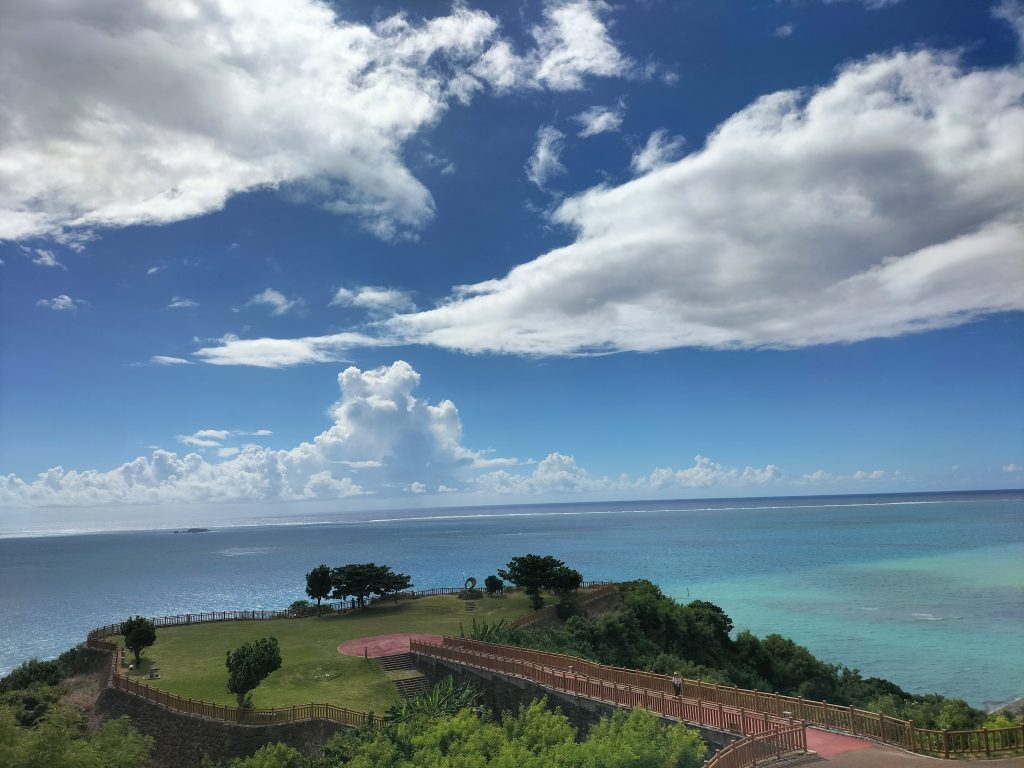
Tokyo can be busy, bright, and full of choices.
There are cafés to visit, shops to browse, stations to pass through, and so many restaurants that it can be hard to decide where to eat.
But sometimes, what I want in Tokyo is something quieter.
Not a trendy lunch.
Not a long course meal.
Not a place where I need to rush.
Just a calm table, a small dish or two, a little sake, and soba at the end.
That is why I like Kanda Yabusoba, a historic soba restaurant in Kanda, Tokyo.
It is well known, and yes, it can be crowded.
But there is still something gentle about the experience.
For me, visiting Kanda Yabusoba is not only about eating soba.
It is also about feeling a small piece of old Tokyo — and enjoying the quiet Japanese culture of drinking at a soba restaurant before the noodles arrive.
In Japanese, this kind of elegant, understated enjoyment can be close to the idea of iki.
Iki is difficult to translate directly.
It is not luxury in a loud way.
It is not showing off.
It is more like quiet style, ease, and knowing how to enjoy something simple without making too much noise about it.
A little sake at lunchtime.
A slice of kamaboko.
A plate of grilled anago.
Cold soba to finish.
That, to me, feels very iki.
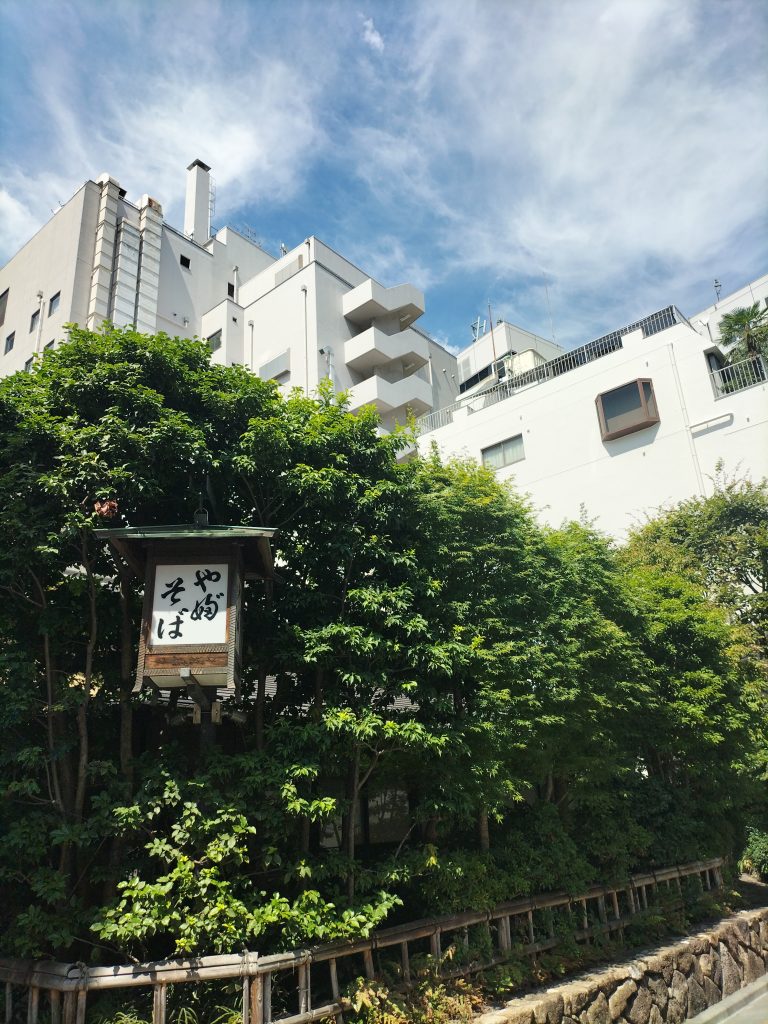
What is Kanda Yabusoba?
Kanda Yabusoba is a long-established soba restaurant located in Kanda Awajicho, an area near Awajicho, Ochanomizu, Akihabara, and Kanda.
It is one of those places that many visitors come to for a traditional Tokyo food experience.
You can come here simply for soba, of course.
But if you have a little more time, I recommend enjoying it slowly.
Order a small dish.
Have a drink.
Then finish with seiro soba.
This style of eating is not unusual in Japan, especially at traditional soba restaurants.
Before eating soba, people may enjoy sake and small dishes.
This is sometimes called enjoying “soba-mae,” the time before soba.
It is a quiet pleasure.
Not drinking too much.
Not staying too long.
Just pausing for a while.
For travelers, I think this is one of the nicest ways to experience Japanese food culture beyond sushi and ramen.
The quiet weekend walk through Kanda
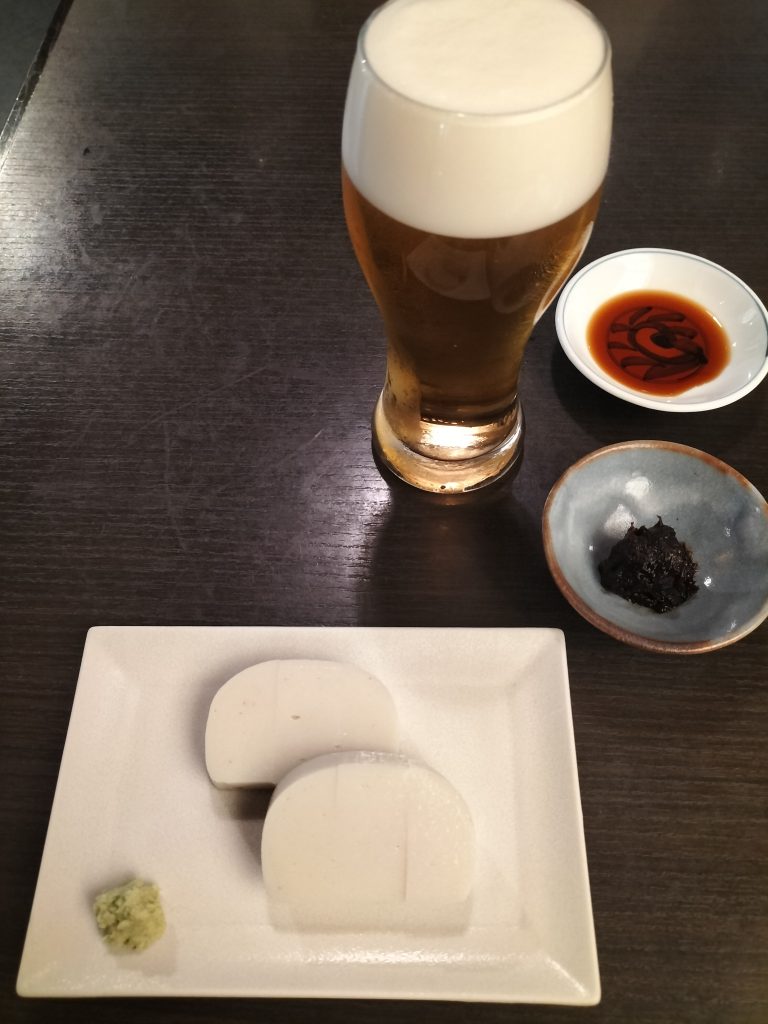
One of the things I like about visiting Kanda Yabusoba on weekends is the walk to the restaurant.
The area around Kanda and Awajicho feels close to business districts.
On weekdays, it can feel more like a working part of Tokyo, with office workers moving through the streets.
But on Saturdays and Sundays, the streets around the restaurant can feel surprisingly quiet.
That quietness is part of what I like.
Tokyo is still Tokyo, of course.
But on a weekend afternoon in Kanda, the city can feel a little softer.
The roads are calmer.
The buildings feel still.
The walk itself becomes part of the meal.
I like that feeling — walking through a quiet business district, knowing that an old soba restaurant is waiting just ahead.
It feels like a small pause inside the city.
Inside, it suddenly feels like a small tourist destination
The funny thing is, once you step inside Kanda Yabusoba, the atmosphere changes.
Outside, the streets may be calm.
Inside, the restaurant is lively.
There are Japanese customers, of course, but there are also many visitors from overseas.
I noticed quite a few Western travelers when I visited.
It almost feels like you have stepped into a little tourist spot — in the best way.
The contrast is interesting.
A quiet street outside.
A busy, international atmosphere inside.
Soba, sake, voices, staff moving quickly, and travelers looking around with curiosity.
It is not a hidden place.
It is not completely quiet inside.
But that is also part of the current experience of Kanda Yabusoba.
It is a historic Tokyo restaurant that still feels alive.
People from many places come here to taste something traditional.
For me, that mix of old Tokyo and international travel energy makes the visit memorable.
Reservations and waiting: what to know before you go
Kanda Yabusoba is popular, so it is a good idea to expect some waiting time.
Reservations are possible, but the number of reserved seats is limited.
If your schedule is tight, or if you are visiting with someone and want to avoid uncertainty, it is worth checking the reservation details in advance.
If you visit without a reservation, you may receive a waiting card.
This is important:
After taking your waiting card, do not walk too far away from the restaurant.
The line may look long, but the turnover can be faster than expected.
Soba restaurants often move more quickly than cafés or restaurants where people stay for a long time.
If you leave the area, your number may be called while you are away.
Kanda is a nice area to walk around, so it can be tempting to go for a short stroll.
But after taking your waiting card, I recommend staying close to the restaurant.
It is a small detail, but it can make your visit much smoother.
Soba and sake: the quiet culture of drinking at a soba restaurant
One of my favorite things about Kanda Yabusoba is not only the soba itself.
It is the experience of drinking a little at a soba restaurant.
In Japan, there is a quiet culture of enjoying sake and small dishes before eating soba.
This is not the same as drinking at an izakaya.
It is calmer.
More restrained.
A little more refined.
You order something small.
You take your time.
You drink slowly.
Then, at the end, you eat soba.
There is a sense of balance in this.
You do not need to order a lot.
You do not need to stay for hours.
You do not need to make it complicated.
This is where I feel the idea of iki.
Iki is the beauty of doing something simply, naturally, and with quiet style.
Drinking sake in the middle of the day may sound indulgent.
But at a soba restaurant, with just a small dish and a calm rhythm, it feels different.
It feels light.
It feels grown-up.
It feels like Tokyo in a quieter mood.
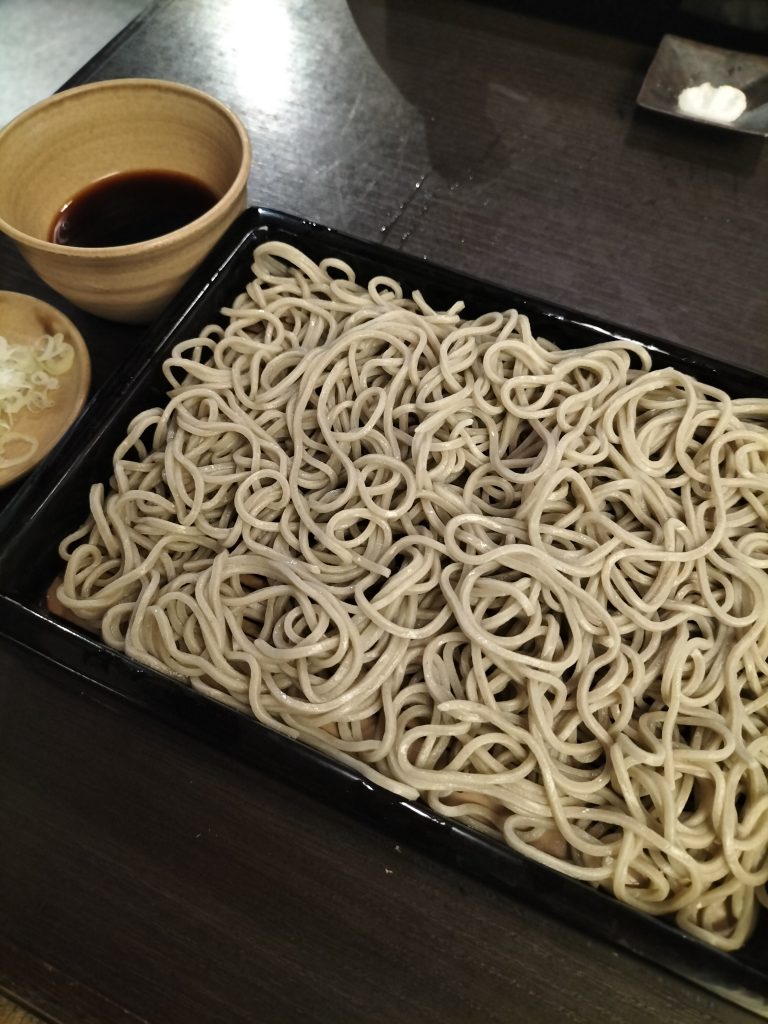
What I ordered: kamaboko, grilled anago, and seiro soba
When I visited, I enjoyed a few simple dishes before the soba.
First, kamaboko.
Kamaboko is a Japanese fish cake. It is simple, clean, and often enjoyed with sake. It is not a flashy dish, but at a traditional soba restaurant, that simplicity feels just right.
A small bite of kamaboko.
A sip of sake.
A little pause.
It is the kind of food that does not ask for attention, but quietly supports the moment.
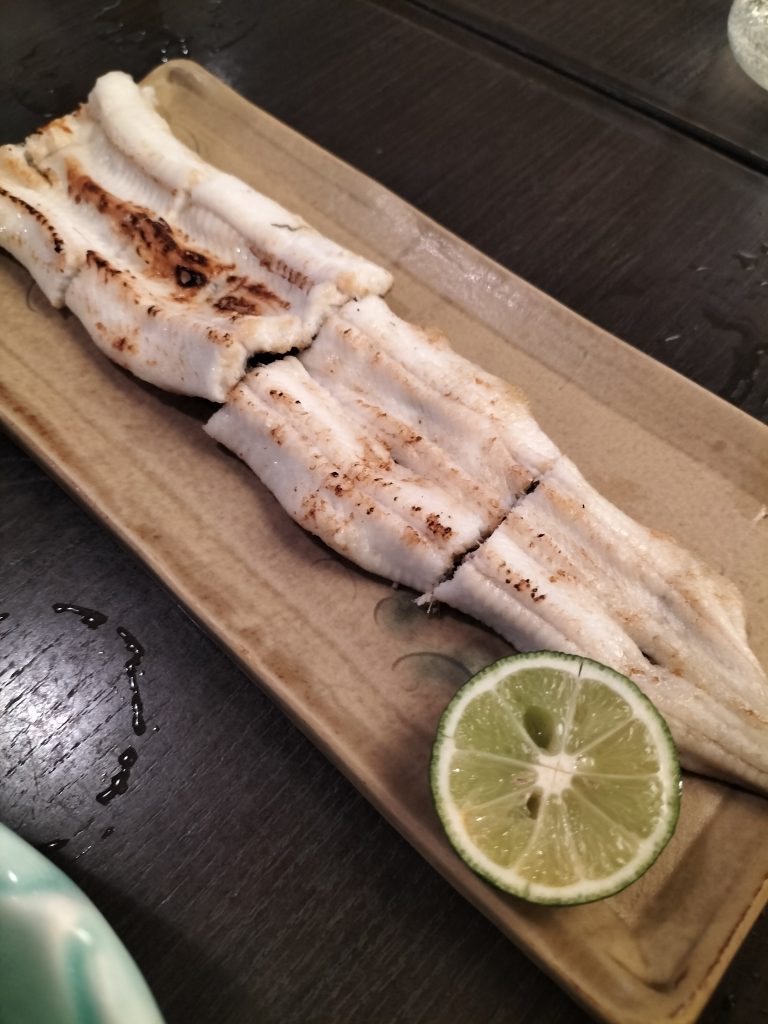
I also enjoyed grilled anago.
Anago is saltwater eel, often translated as conger eel. Compared with unagi, it usually feels a little lighter. Grilled anago works well as a small dish before soba, especially if you want something warm and savory.
Together, these dishes made the lunch feel more complete.
Not too heavy.
Not too much.
Just enough.
And then, at the end, I had seiro soba.
Seiro soba is cold soba served on a bamboo tray, with dipping sauce on the side. It is one of the classic ways to enjoy soba.
After sake and small dishes, seiro soba feels like a clean finish.
The seiro soba portion is quite small
One thing to know before visiting: the seiro soba portion felt quite small to me.
If you have a small appetite, it may be just right.
If you are very hungry, you may want to order side dishes, or consider ordering more soba.
For me, after having small dishes and a drink, the portion felt comfortable. It was light enough that I could still walk around Tokyo afterward without feeling too full.
That is another thing I liked.
This is not the kind of lunch that leaves you heavy and sleepy.
It is more like a gentle pause in the day.
A little sake.
A few small dishes.
A light serving of soba.
Then back out into the city.
For a Tokyo travel day, that can be just right.
Practical tips for visiting Kanda Yabusoba
Here are a few simple tips if you are planning to visit Kanda Yabusoba for the first time.
If your schedule is tight, check the reservation details before you go.
If you visit without a reservation, expect that there may be a wait.
If you receive a waiting card, stay near the restaurant. The line may move faster than it looks.
Weekends can be nice because the surrounding streets feel quieter than on weekdays.
Inside the restaurant, however, expect a lively atmosphere.
There may be many overseas visitors, especially during busy travel seasons.
If you want a fuller meal, consider ordering small dishes before your soba.
If you prefer a light lunch, seiro soba may be enough.
And if you are curious about Japanese food culture, try enjoying a small drink before your soba.
It is a very traditional and quietly elegant way to experience a soba restaurant.
Is Kanda Yabusoba good for solo travelers?
I think Kanda Yabusoba can be a good place for solo travelers, especially if you are comfortable eating alone in a busy restaurant.
Because the restaurant is popular and has a steady flow of customers, it does not feel strange to be there by yourself.
You can order simply.
You can eat at your own pace.
You can enjoy the atmosphere without needing to stay too long.
For solo travelers in Tokyo, this kind of place can be very nice.
It gives you a real food experience, but it does not require too much planning or formality.
Just be ready for some waiting, and stay close after taking your waiting card.
Final thoughts: a small taste of old Tokyo
Kanda Yabusoba is not just a place to eat soba.
For me, it felt like a small pause in Tokyo.
The walk through quiet Kanda on a weekend.
The sudden lively atmosphere inside.
The mix of Japanese customers and overseas travelers.
A little sake.
Kamaboko.
Grilled anago.
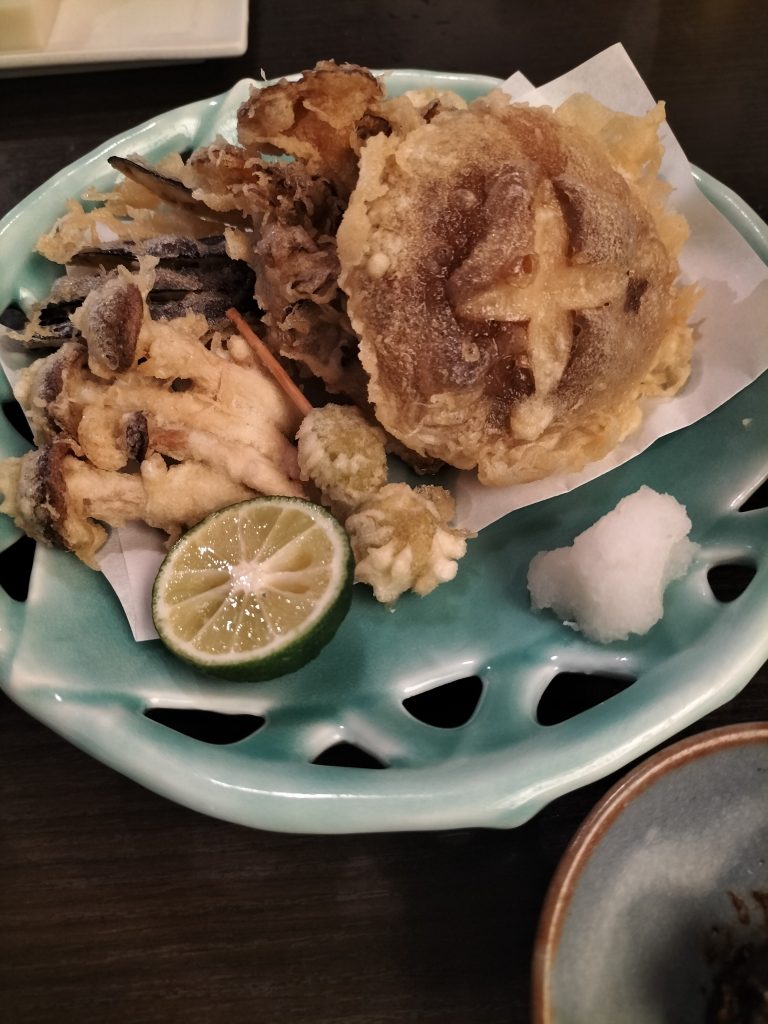
Assorted seasonal Tempura.
And seiro soba at the end.
It is not a dramatic experience.
But maybe that is why I liked it.
There is something very Japanese — and very Tokyo — about enjoying something simple with care.
Not rushing.
Not over-ordering.
Not trying too hard.
Just sitting down, drinking a little, eating soba, and letting the city slow down for a moment.
That quiet sense of style is what I think of as iki.
If you are looking for a traditional soba lunch in Tokyo, Kanda Yabusoba is worth considering.
And if you want to experience more than just the noodles, try enjoying it the slow way:
a small dish,
a little sake,
and soba to finish.
Sometimes, that is enough to make a Tokyo afternoon feel memorable.
Practical Information
Restaurant: Kanda Yabusoba
Area: Kanda / Awajicho, Tokyo
Address: 2-10 Kanda Awajicho, Chiyoda-ku, Tokyo
Nearest stations: Awajicho, Ochanomizu, Kanda, Akihabara
Best for: Traditional soba, light lunch, soba and sake, solo travelers, old Tokyo atmosphere
Tip: If you receive a waiting card, stay near the restaurant so you do not miss your number.